.webp?width=145&height=145&name=Hubspot%20Platinum%20(1).webp)


HubSpot is one of the most powerful platforms for aligning marketing, sales, and customer success, but powerful does not automatically mean effective. In fact, a surprisingly large number of businesses invest in HubSpot with the expectation of transformational growth, only to find themselves frustrated by low adoption, messy data, broken automation, and weak reporting. The tool itself isn’t the problem; the implementation and ongoing governance are.
Here’s a breakdown of the most common reasons HubSpot implementations fail, why they matter, and how to fix them so your CRM becomes a growth engine instead of a digital graveyard.
1. Skipping Strategy and Onboarding Planning
One of the earliest mistakes businesses make is treating HubSpot like a plug-and-play product you can “turn on” and expect results from. Without a structured plan that maps HubSpot to your actual business goals and processes, you end up with a setup that doesn’t reflect how your teams work or what success looks like.
A clear strategy should include:
-
Documented business objectives: revenue growth, lead velocity, customer retention, etc.
-
A mapped customer journey from first touch to loyal advocate.
-
Alignment between marketing, sales, and service on what HubSpot will do for them.
Jumping straight into configuration without this foundation leads to confusion, misalignment, and tools that don’t support real workflows which in turn kills adoption and ROI. HubSpot itself emphasises starting with clear use-cases and business outcomes rather than features alone.
Fix: Schedule a pre-implementation workshop with your key stakeholders. Define goals, agree on success metrics, and document what your ideal sales and marketing funnel looks like before you touch the platform.
2. Messy CRM Data and Poor Lifecycle Definitions
A CRM is only as good as the data inside it. One of the most persistent reasons HubSpot setups fail is dirty data which leads to duplicates, inconsistent fields, missing contacts, and poorly defined lifecycle stages. When your team can’t trust the data, they stop using the system altogether.
HubSpot lifecycle stages (e.g., Subscriber → Lead → MQL → SQL → Customer) are core to reporting and automation. Yet many businesses never define what each stage means for their own sales process or they let imports overwrite these values, sending contacts back to earlier stages or leaving them stuck without progression logic.
Fix:
-
Clean and deduplicate all CRM data before or during migration.
-
Standardise key properties and enforce formats using tools like HubSpot’s Data Quality Command Center.
-
Define clear, criteria-based entry and exit rules for every lifecycle stage.
-
Build workflows that only move contacts forward, and prevent manual rolling back of stages.
Set quarterly data hygiene checks as a recurring task.
With reliable data and lifecycle logic in place, reporting becomes meaningful and teams start to trust what they see which improves adoption and decision-making.
3. Poor Onboarding and Insufficient Training
Even the best strategy and clean data won’t help if your team doesn’t know how to use HubSpot properly. Statistics and user feedback suggest that CRM projects fail more often because of human factors and not technology.
Common post-onboarding mistakes include:
-
Assuming users will “figure it out.”
-
One-off product walkthroughs instead of role-specific training.
-
Lack of documentation for custom workflows or property conventions.
-
No onboarding for new hires or updates when processes evolve.
Fix:
-
Invest in structured onboarding tailored to your team’s roles: marketing, sales, customer support, and leadership.
-
Use HubSpot’s free HubSpot Academy courses alongside internal walkthroughs tailored to your processes.
-
Maintain up-to-date internal documentation on how the system should be used.
Driving adoption isn’t a single activity but an ongoing habit.
4. Over-Automating Without Oversight
Automation is one of HubSpot’s greatest strengths. Workflows can nurture leads, notify teams, update properties, and much more but automation without guardrails causes its own problems.
Common automation pitfalls include:
-
Creating overly complex workflows with many branches and unclear logic.
-
Leaving automations running indefinitely without review.
-
Automating actions before teams are comfortable with the basics.
This leads to irrelevant emails, stuck deals, broken logic, and frustrated users. In other words, automation meant to save time ends up increasing confusion and reducing trust.
Fix:
-
Start with simple workflows tied directly to business outcomes.
-
Audit automations regularly or at least quarterly in order to ensure they still make sense.
-
Document workflow intent, triggers, and expected outcomes.
Automation should amplify human effort, not replace it. When you pace automation to match team readiness and business maturity, you reap the benefits without chaos.
5. Failing to Tie Success to Business Outcomes
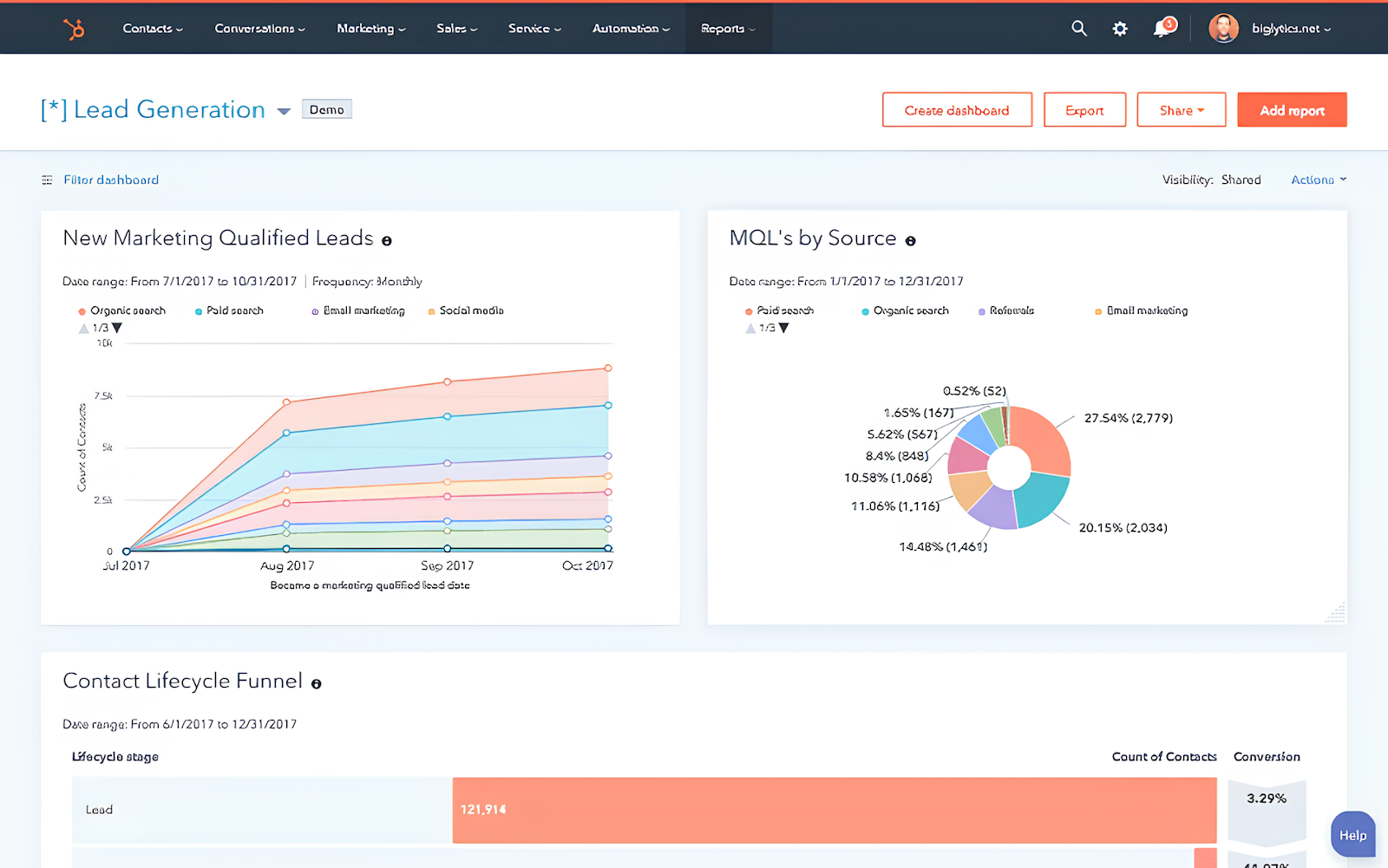
Lastly, many organizations mistakenly measure HubSpot success by being live rather than by business impact. You can set up every tool, dashboard, and workflow perfectly, and still walk away disappointed if you never tie activity to outcomes like pipeline growth, conversion rates, customer retention, or revenue contribution.
Useful metrics include:
-
MQL → SQL conversion rate.
-
Deal close velocity and revenue generated per campaign.
-
Lead source attribution tied to actual revenue.
-
CRM adoption and log-in rates across teams.
HubSpot has native reporting tools and dashboards to help track these business-driven KPIs but you need to set them up early and monitor them consistently.
Fix: Build dashboards that reflect your strategic goals and not just what’s easy to report on. Check them every month with your leadership team to ensure HubSpot is contributing measurable value.
Conclusion
Most HubSpot failures are avoidable. Lack of strategy, messy data, poor training, uncontrolled automation, and weak reporting are the main culprits. When businesses address these areas, HubSpot becomes a reliable growth engine. If you want to make sure your HubSpot system is performing at its best, consider a full audit and tailored implementation plan with Arcs & Curves. We specialize in HubSpot setup, implementation, and optimization, ensuring your platform is configured to match your business goals, workflows, and team needs. With the right setup and guidance, your HubSpot investment can drive measurable results from day one.

.jpg?width=596&name=2crmimp%20(1).jpg)